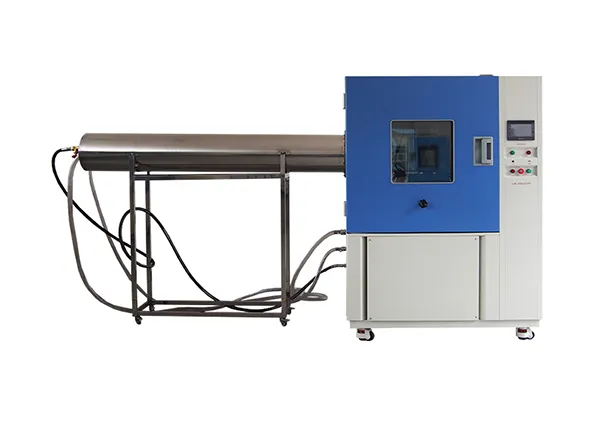
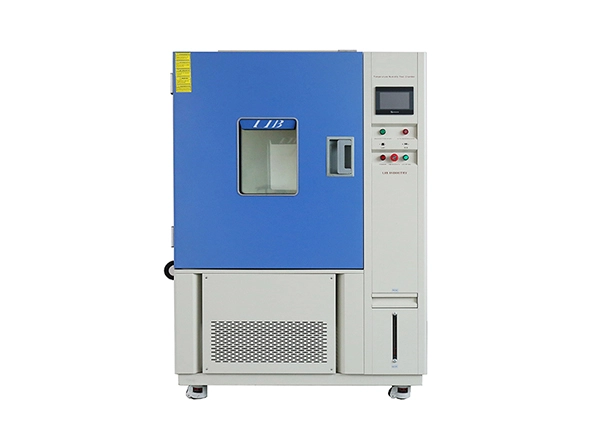
EV battery packs are often tested under controlled temperature conditions to evaluate electrical performance, thermal behavior, reliability, and operating stability. For used EV batteries, electric bus batteries, battery modules, and other high-energy systems, charge and discharge cycling at controlled temperatures provides repeatable test conditions without exposure to uncontrolled ambient changes.
Choosing a temperature test chamber for EV battery testing is different from selecting a conventional environmental chamber. The chamber may need to hold large and heavy battery packs, remove heat generated during cycling, provide cable access to an external battery cycler, and include safety protection matched to the battery energy and test procedure. It should therefore be selected as part of the complete battery test system, not by temperature range alone.
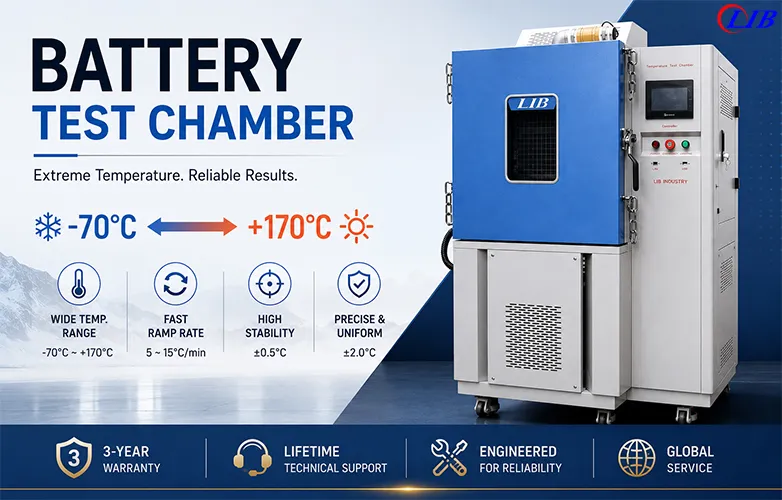
Sufficient internal space and a reinforced floor, tray, or loading system for the largest battery pack
Stable temperature control under battery heat load
Cable ports for the external cycler, sensors, and BMS
Monitoring, emergency shutdown, and other safety functions suited to the battery and test risk
The final configuration depends on battery chemistry, dimensions, weight, voltage, current, energy, heat generation, test temperature, and safety scenario.
Complete EV battery packs can be much larger and heavier than cells or modules. A chamber that looks large enough by volume may still be unsuitable if it lacks clearance for cables, airflow, instrumentation, and safe loading. The usable working space should account for:
Battery dimensions and orientation
Cable and connector clearance
Air circulation around the battery
Temperature sensor placement and inspection access
Distance from chamber walls and safety components
Loading is equally important. Heavy packs may need a cart, pallet jack, lifting equipment, or a dedicated tray rather than manual placement. Common configurations include low-profile reach-in chambers with pull-out trays, lift-hood or bell-type designs, and larger custom chambers for oversized systems.
When a standard footprint does not fit, LIB Industry can customize the working room dimensions and internal configuration for cylindrical, prismatic, pouch, module, and EV battery applications.
Temperature control becomes more demanding when a battery is actively cycling. Depending on current, power, efficiency, state of charge, and test duration, the battery can generate substantial heat, which becomes a load on the chamber's refrigeration system.
A chamber should not be chosen only by its rated temperature range. Ask the manufacturer to confirm how much heat it can remove at your required chamber temperature. For example, holding a stable 25°C around an actively cycling battery requires far more cooling capacity than conditioning an inactive specimen.
A chamber sized for the real heat load gives more stable conditions and reduces temperature drift during long cycles.
In most battery laboratories, the cycler stays outside the chamber while the battery sits inside. Cable access is needed for:
DC power cables
Voltage and current measurement
Temperature sensors
BMS and CAN communication
Other instrumentation
Cable ports should be defined before manufacturing. High-current cables are large and hard to bend, and insufficient clearance makes installation and maintenance difficult. Cable penetrations must also preserve the chamber's sealing and environmental performance while the external system stays connected throughout the test. LIB can adjust port size, quantity, and location to match the cycler and test layout.
Not every cycling test needs an extreme range. Routine charge/discharge cycling may only need something like 0°C to +50°C, while other programs require sub-zero testing for low-temperature charging, cold-start behavior, capacity retention, or thermal performance. Choose the range from the test protocol rather than defaulting to the widest specification.
 |  |
| |
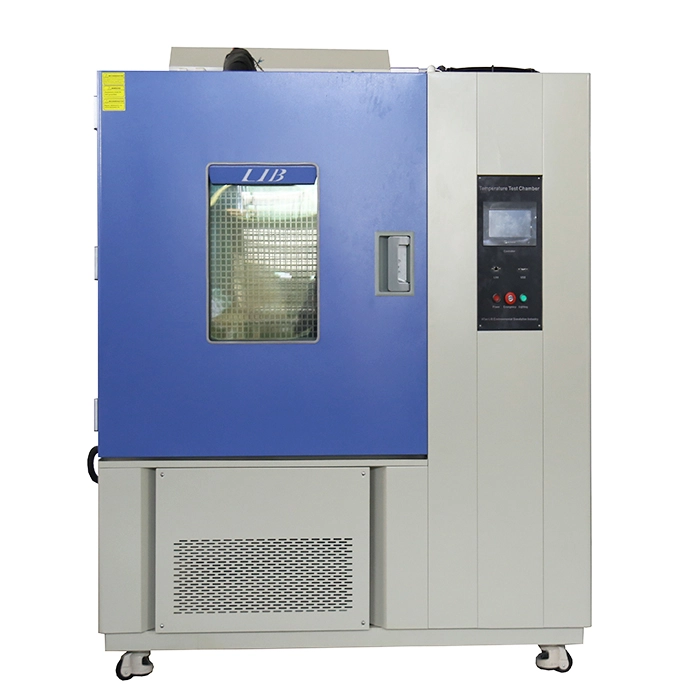
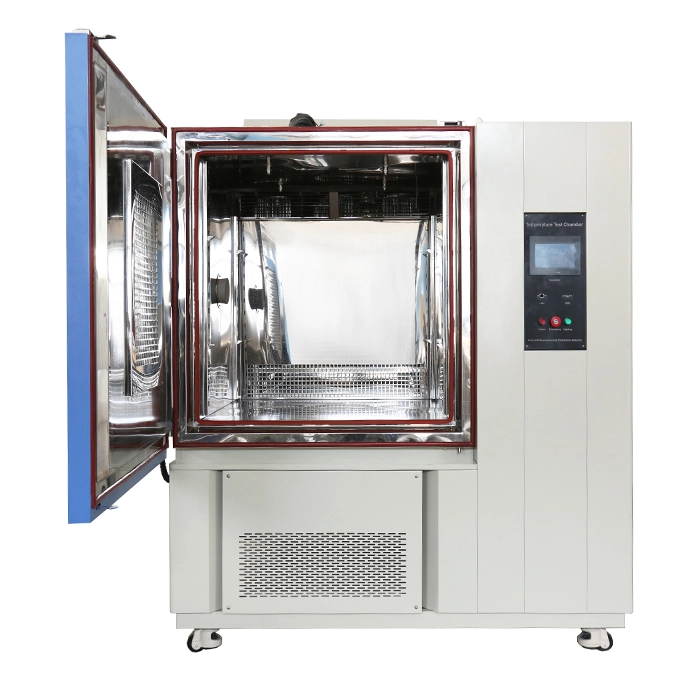
The LIB Battery Test Chamber (listed model TR10-1000C) offers:
Temperature range of -70°C to +170°C
Temperature fluctuation of ±0.5°C and deviation of ±2.0°C
Average heating and cooling rate of up to 10°C/min
Standard internal working size of 1000 × 1000 × 1000 mm, with larger or customized spaces available
Humidity control is also not essential for every application. When the goal is charge/discharge cycling and electrical characterization, a temperature-focused configuration may be sufficient.
A high-energy battery demands more consideration than a conventional electronic specimen. Depending on chemistry, energy, and test procedure, an abnormal event may involve smoke, fire, gas release, pressure buildup, or mechanical damage. A layered safety design should be matched to the actual test risk.
Reinforced construction. A reinforced workroom offers physical protection during abnormal events, and the observation area can be designed to reduce exposure to fragments. The LIB chamber uses a reinforced workroom, a protected observation window, and explosion-proof door and chain arrangements.
Smoke and pressure detection. These provide early indication of abnormal behavior. On the listed LIB configuration they are integrated into the safety system, and the controller can respond with alarm and shutdown functions.
Fire suppression. LIB's chamber uses an automatic water spray system that activates after smoke detection and fire confirmation, cooling the battery and limiting fire spread. The most appropriate suppression method should still be determined by battery type, laboratory requirements, and the actual test scenario.
Emergency exhaust. Smoke or gases from an abnormal event should not be released into the laboratory. An emergency exhaust system removes contaminated air and directs it to a suitable external location. LIB's listed configuration includes a smoke exhaust system.
Automatic test shutdown. Chamber alarms or emergency-stop signals should be connected to the external cycler so charging or discharging is interrupted when an abnormal condition occurs, creating a coordinated protection chain between battery, chamber, and cycler.
Match protection to risk. Routine controlled-temperature cycling mainly requires stable temperature control, sufficient cooling capacity, cable access, loading support, monitoring, and coordinated shutdown. Abuse or thermal runaway testing may additionally require containment, pressure relief, gas management, fire suppression, and exhaust protection. Applying the most complex safety package to every application is unnecessary.
EUCAR hazard levels describe the severity of battery test outcomes, with higher levels representing more serious consequences. LIB's current Battery Test Chamber page describes support for testing across EUCAR Hazard Levels 0–7. Even so, a chamber should be specified according to the actual battery and test procedure, not a hazard-level number alone.
When discussing an EUCAR Level 6 application with any supplier, clarify:
Whether the safety design is intended for cells, modules, or complete packs
What battery energy level was considered
What abnormal event scenario was evaluated
Which containment and suppression functions are included
What testing, calculation, or engineering evidence supports the configuration
For a specific project, confirm the applicable safety configuration and validation scope against your actual battery size, energy, and test conditions.
A standard chamber can suit cells, modules, and smaller assemblies. Large EV battery packs often need customization, for example:
Internal dimensions and reinforced floor or battery support
Pull-out tray or other loading arrangement
Cooling capacity for the expected heat load
Interlock signals and external cycler interface
Customization lets the chamber be designed around the actual specimen rather than forcing a large battery into a standard enclosure. To get an accurate quotation, provide the manufacturer with:
Battery dimensions and weight
Electrical parameters (voltage, current, power)
Expected heat load
Target temperature range
Test procedure and safety requirements
LIB Industry provides dedicated Battery Test Chambers for lithium-ion batteries, EV battery modules, battery packs, and energy storage systems, supporting controlled-temperature charge/discharge testing as well as battery environmental and safety testing. The platform combines temperature control with battery-specific protection and intelligent control, and can be configured around the complete test setup, including specimen loading, cable access, heat-load requirements, and external cycler integration.
LIB Industry provides a 3-Year Manufacturer Warranty (36 months) together with lifetime technical support. International customers can receive installation guidance, remote commissioning support, technical training, and troubleshooting assistance. LIB also supports replacement parts with 48-Hour Spare Parts Express service by DHL or FedEx to reduce downtime, and remote video assistance is available for troubleshooting.
|
|
|
|
|
|
Need a temperature test chamber for EV battery charge and discharge testing? Contact LIB Industry with your battery dimensions, weight, temperature range, heat load, and safety requirements to discuss a suitable configuration.

 English
 русский
 français
 العربية
 Deutsch
 Español
 한국어
한국어 italiano
 tiếng việt
 ไทย
ไทย Indonesia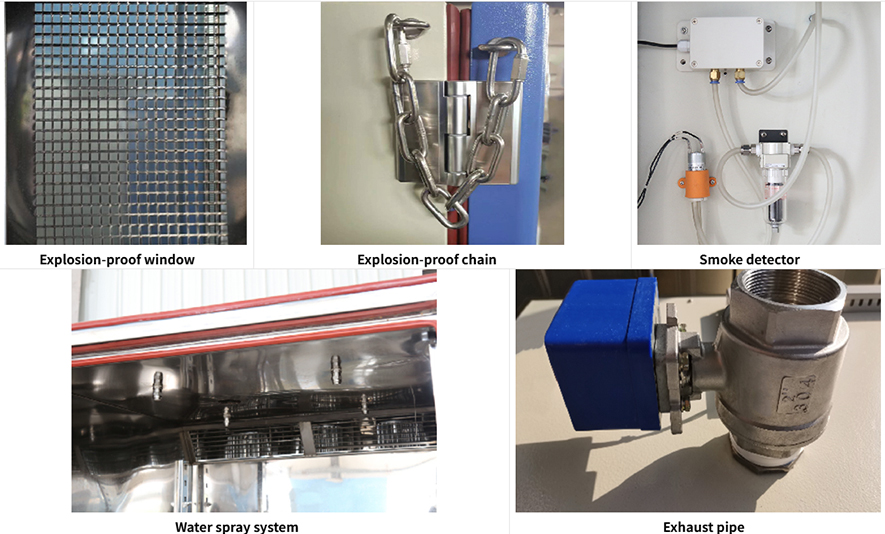
.webp "ISO 7326 Static Dynamic Ozone Chamber for Hose")
.webp "ASTM G154 Outdoor Furniture Testing: Prevent Fading, Cracking and Chalking")