Need a Thermal Shock Chamber for Battery Testing? Request a Quote in 24 Hours.
 Battery testing is not always limited to holding a cell, module, or pack at a fixed high or low temperature. Automotive battery components may also need to withstand rapid temperature changes, liquid immersion, electrical connections, and repeated thermal stress.
For these applications, the test equipment needs to match the actual test procedure, including the test medium, transition speed, fixture, electrical connections, and liquid heating requirements.
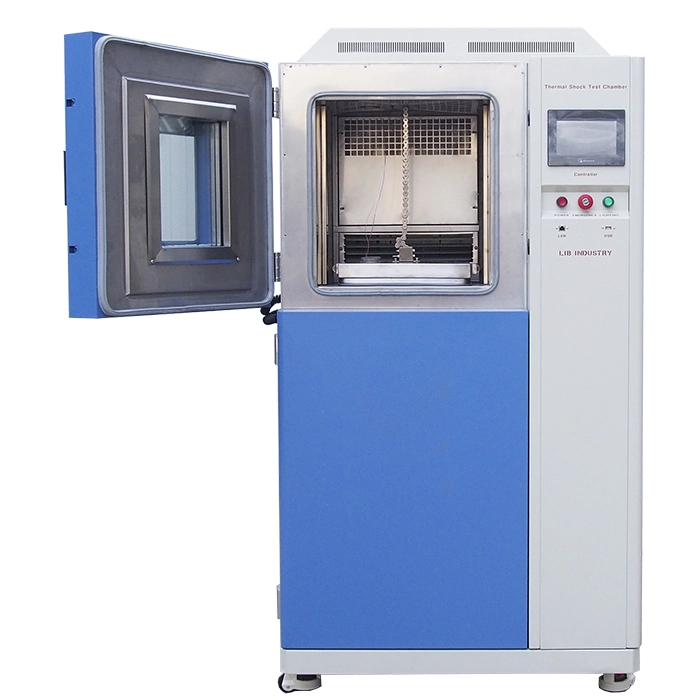
A Mercedes-Benz battery testing project is a good example. In 2021, LIB received a requirement through its UK agent for a system capable of supporting high- and low-temperature testing and oil immersion testing of batteries. The resulting T-350 solution was customized with a battery fixture, electrical connection openings, and a higher-power liquid heating system.
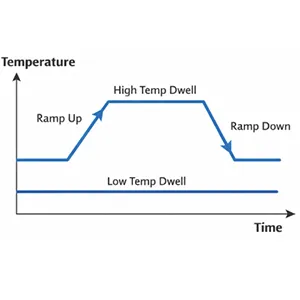
Thermal shock testing exposes a specimen to rapid changes between different temperature environments or media. The objective is to determine whether the battery or component can maintain its physical, electrical, and functional performance after rapid thermal transitions.
For automotive battery applications, typical test points include:
Enclosure integrity: Check for cracking, deformation, or other physical damage.
Sealing performance: Inspect seals, joints, connectors, and interfaces for leakage or loss of sealing performance.
Electrical connections: Evaluate connectors, terminals, cables, and feedthroughs after thermal expansion and contraction.
Insulation performance: Check whether insulation materials maintain their required electrical properties.
Mechanical stress: Evaluate stress caused by different thermal expansion rates between materials and assemblies.
Fluid compatibility: For oil, coolant, or other specified liquid exposure, inspect materials and seals for swelling, deformation, degradation, or leakage.
Functional performance: Depending on the test specification, verify battery or component operation before and after environmental exposure.
IEC 60068-2-14 covers change-of-temperature testing, while ISO 16750-4 addresses climatic loads for electrical and electronic equipment used in road vehicles. The exact temperature limits, dwell time, transition conditions, cycle count, and acceptance criteria should follow the applicable test standard or OEM specification.
In September 2021, an engineer from Mercedes-Benz contacted a UK agent with a requirement to perform high- and low-temperature testing and oil immersion testing on batteries.
The challenge was not simply to create a hot and cold environment. The system also needed to accommodate the battery assembly, electrical connections, customized fixture requirements, and rapid heating of the test liquid.
LIB developed the T-350 around these actual test requirements.
Customer Requirement | LIB Solution |
Battery positioning | Customized battery fixture |
Electrical connection | Customized power connection openings |
Cable routing | Opening size, quantity, and position designed according to requirements |
Oil immersion | Customized liquid test configuration |
Faster liquid heating | Higher-power heating tubes |
| Internal arrangement | Customized chamber and tank design |
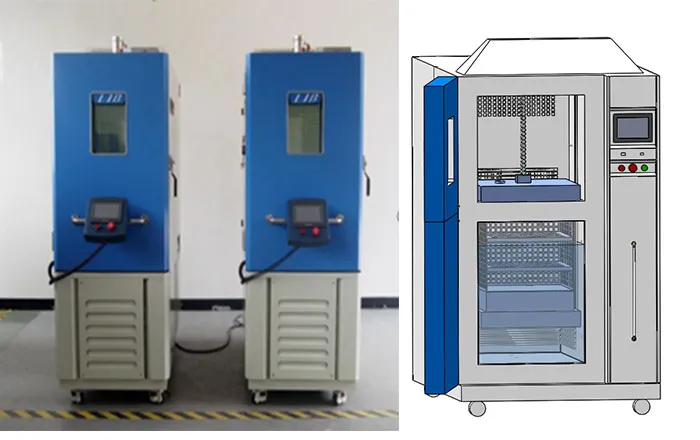 | |
LIB industry provided design drawings covering the battery fixture, power connection openings, their size and position, and other internal chamber details.
The project then moved through the following stages:
September 2021 — Test requirement received
↓
Custom engineering and design
↓
September 2022 — Purchase agreement received
↓
November 2022 — Equipment delivered and put into use
↓
Customer feedback — The UK agent reported that Mercedes-Benz was satisfied with the customized equipment
The project shows why battery thermal shock equipment often needs to be engineered around the test process, rather than selected only by temperature range.
A conventional temperature chamber is generally used to maintain a specimen at a specified temperature for a defined period. Thermal shock testing places greater emphasis on the rapid transition between different temperature conditions.
Test Method | Main Purpose | Typical Test Focus | |
High/Low Temperature Test | Long-duration environmental exposure | Stability and functional performance | |
Temperature Cycling | Repeated temperature changes | Durability and material response |
|
Air-to-Air Thermal Shock | Rapid hot/cold transition | Thermal stress, seals, connectors | 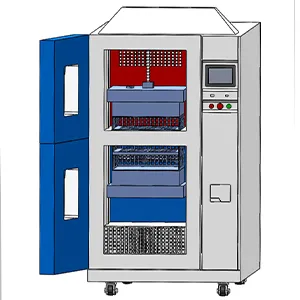 |
Air-to-Liquid Thermal Shock | Temperature change combined with liquid exposure | Sealing, fluid compatibility, battery components | 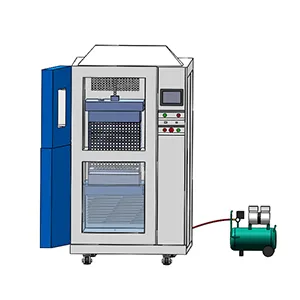 |
Liquid-to-Liquid Thermal Shock | Direct liquid thermal transition | Thermal stress and fluid compatibility | 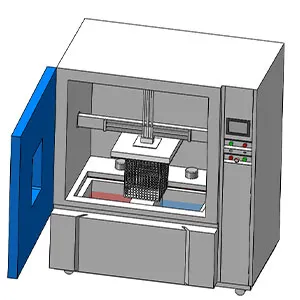 |
For a battery that needs both temperature transition and oil or liquid exposure, a standard temperature chamber may not provide the required test configuration.
The choice of thermal shock system therefore depends on temperature range, transition speed, test medium, sample size, load, liquid properties, and test sequence.
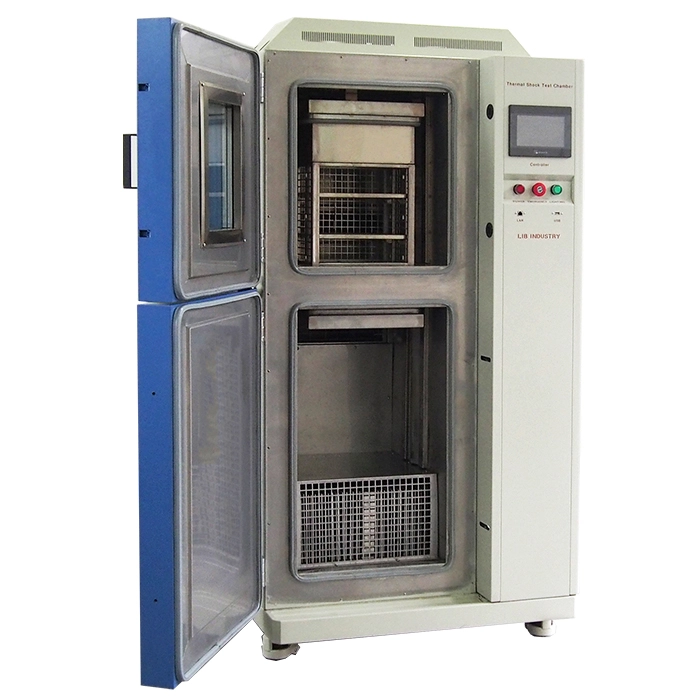 Air-to-Air Thermal Shock Chamber — 2-Zone
A two-zone thermal shock chamber uses separate hot and cold chambers. The specimen basket transfers the test sample between the two temperature zones.
LIB's Thermal Shock Chamber series includes TS-162, TS-340, TS-500, and TS-1000. Depending on the model, the system provides:
Test temperature: -70°C to +200°C
Basket transfer: ≤3 seconds
Temperature fluctuation: ≤±0.5°C
Recovery time: ≤5 minutes
Loading capacity: 20–60 kg
Volume: 22–505 L
The system is suitable for battery components, connectors, electronic assemblies, sealing materials, automotive components, and other specimens requiring rapid temperature transitions.
The key performance factor is not simply the maximum temperature. A transfer time of ≤3 seconds determines how quickly the specimen enters the new thermal environment.
Explore LIB Thermal Shock Chamber
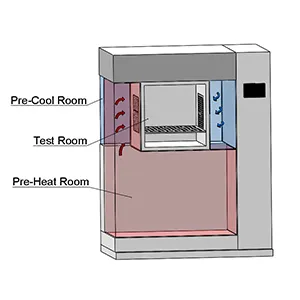
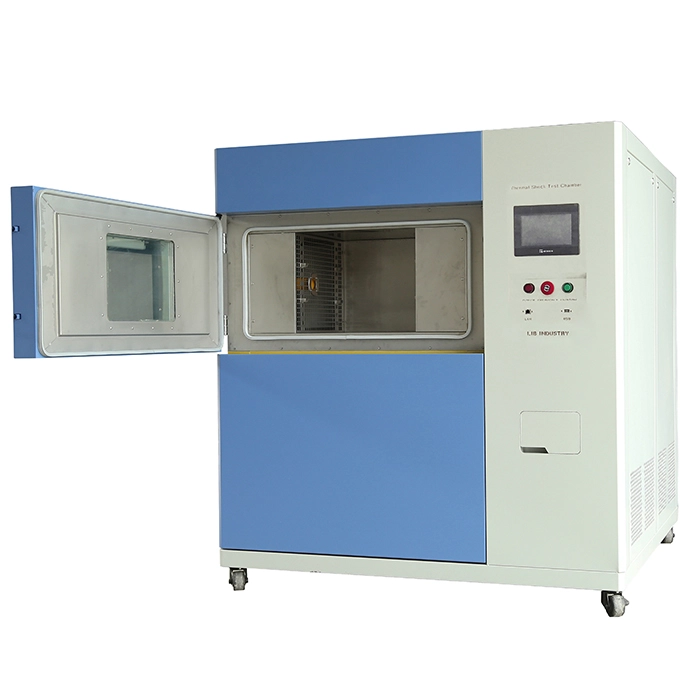
A three-zone system uses high-temperature, test, and low-temperature zones. The specimen remains in the test area while the required temperature conditions are prepared and transferred into the test zone.
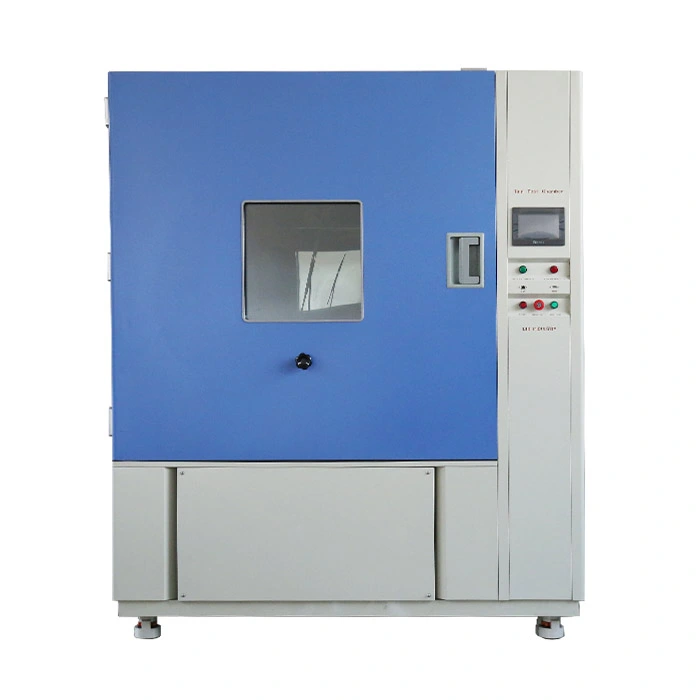
LIB's High and Low Temperature Impact Test Chamber includes 3TS-100, 3TS-210, 3TS-300, and 3TS-500 models.
 |  |
Key specifications include:
Test exposure: -65°C to +200°C
Pre-cooling zone: down to -75°C
Pre-heating zone: up to +220°C
Temperature fluctuation: ≤±0.5°C
Recovery time: ≤5 minutes
Loading capacity: 10–35 kg
This configuration can be useful for larger or wired components where moving the specimen between separate chambers is inconvenient.
Typical applications include battery assemblies, automotive electronics, connectors, enclosures, and other components requiring rapid high/low temperature impact testing.
Explore LIB High and Low Temperature Impact Test Chamber
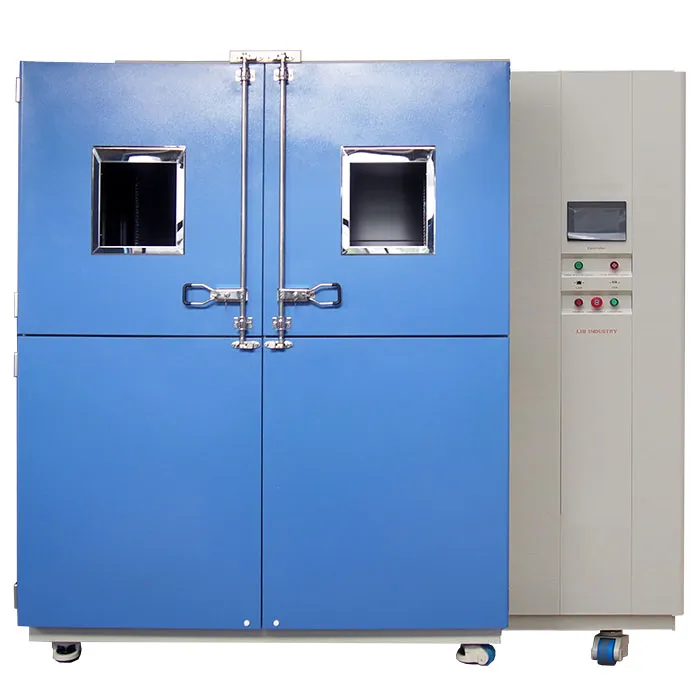
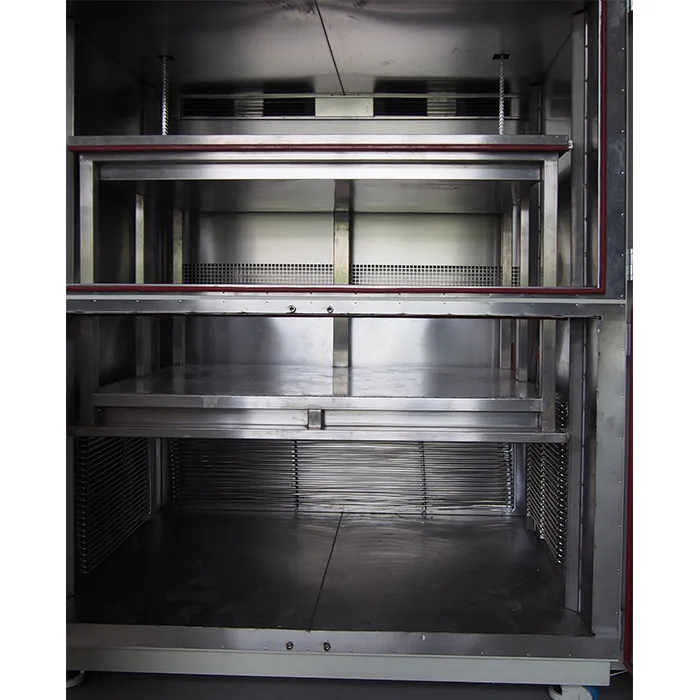
When a test requires temperature-controlled air exposure followed by liquid immersion, an Air to Water Thermal Shock Chamber provides a different approach.
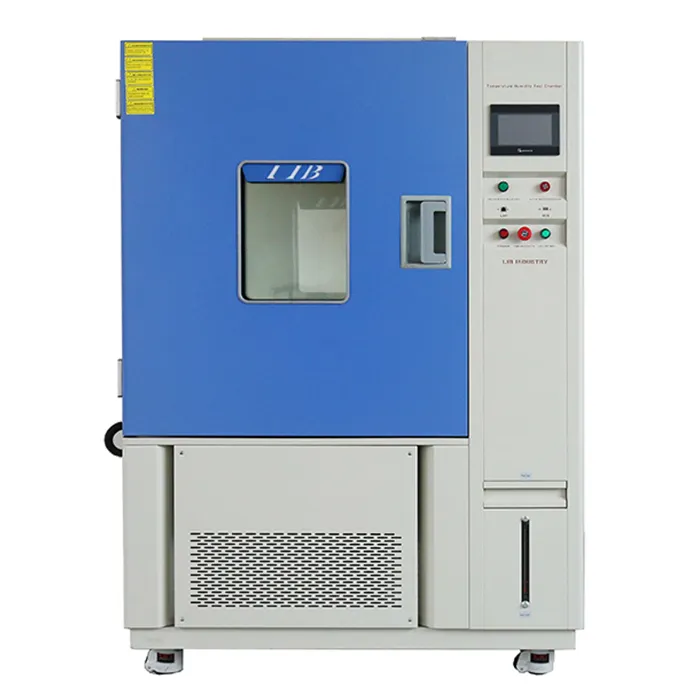
LIB's system combines a hot-air chamber with a temperature-controlled liquid tank. The specimen can be transferred into the liquid bath within 3 seconds.
 |  |
Key capabilities include:
Hot-air temperature: up to +200°C
Liquid temperature: configurable down to approximately -30°C with suitable solution
Transfer time: ≤3 seconds
Customized liquid capacity and test dimensions
Customized fixtures and payload
Liquid temperature control through an integrated cooling system
LIB lists IEC 60068-2-14 Nc, JESD22-A106B, MIL-STD-883J Method 1011.9, MIL-STD-202 Method 107, and LV124 among applicable standards for this configuration.
For the Mercedes-Benz project, the same air-to-liquid testing concept was adapted for oil immersion, with additional battery fixture, electrical connection, and liquid-heating requirements.
Explore LIB Air to Water Thermal Shock Chamber
Liquid-to-liquid thermal shock exposes the specimen directly to two controlled liquid environments at different temperatures.
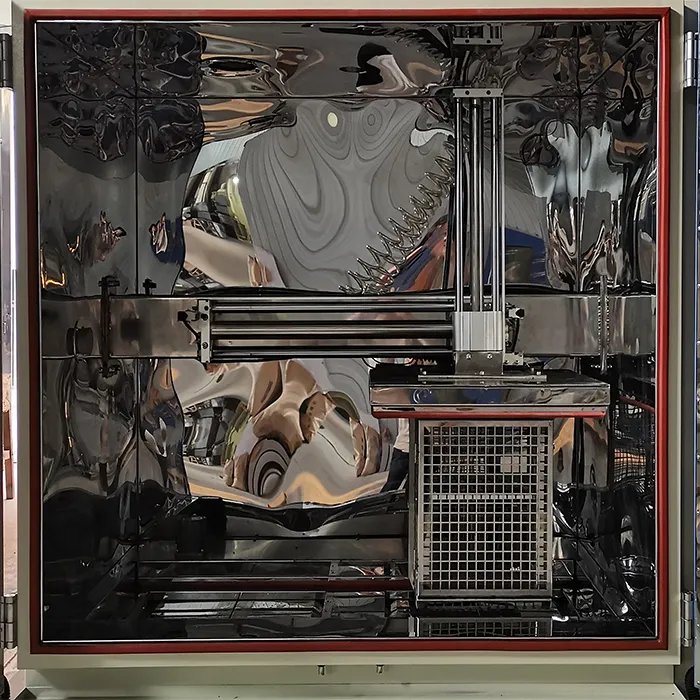 | 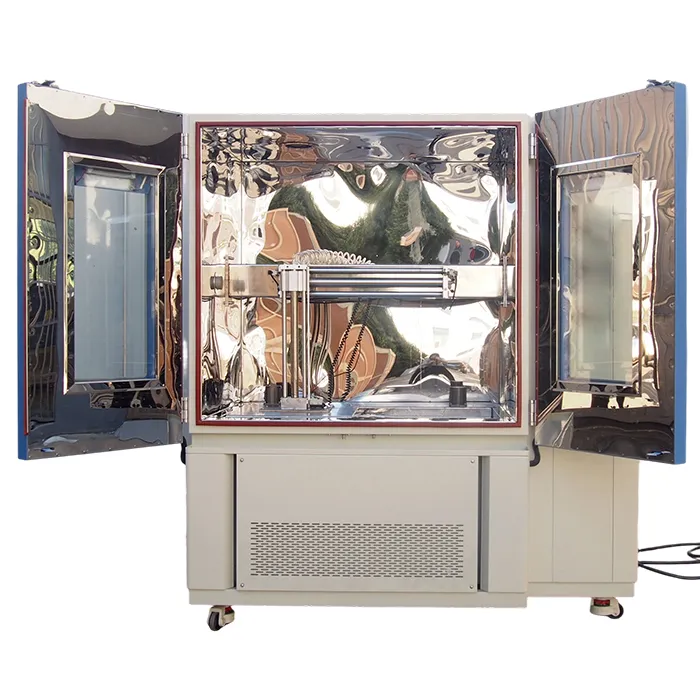 |
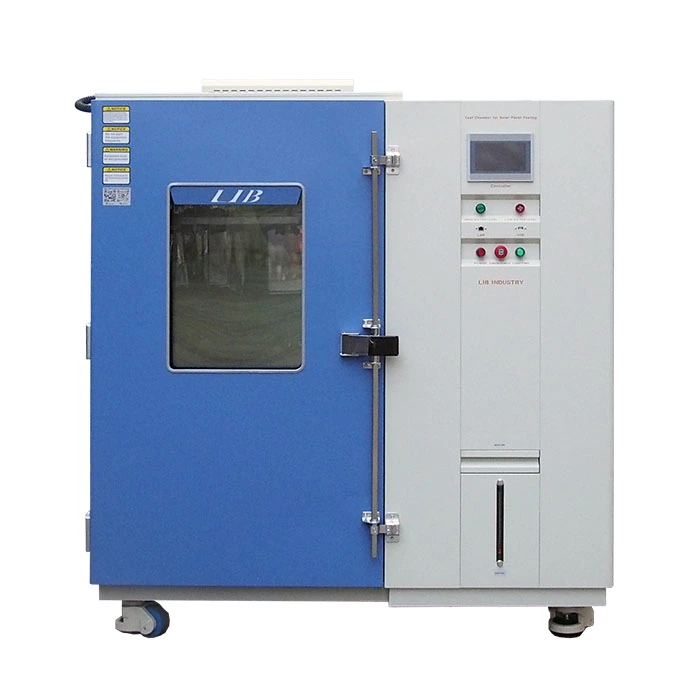
LIB's Liquid to Liquid Thermal Shock Test Chamber is available in:
Liquid chamber volume: 22 / 72 / 211 / 505 L
Temperature fluctuation: ≤±0.5°C
Liquid transfer time: approximately 10 seconds
Basket material: SUS304 stainless steel
Programmable temperature and dwell time
Programmable cycle count and transfer speed
Depending on the application, the system can use silicone oil, fluorinated liquids, or other specified test media.
This configuration can be used to evaluate direct thermal stress, fluid compatibility, sealing performance, material deformation, and component reliability under repeated liquid thermal transitions.
Applicable standards listed by LIB include IEC 60068-2-14, MIL-STD-883, MIL-STD-202, JIS C 0025, and IPC-TM-650 2.4.6.
Explore LIB Liquid to Liquid Thermal Shock Test Chamber
The appropriate configuration depends on what the battery or component actually needs to experience.
Test Requirement | Suitable Configuration | Key Capability |
Rapid hot/cold air exposure | 2-Zone Thermal Shock Chamber | -70°C to +200°C, ≤3 s transfer |
Hot/ambient/cold sequence | 3-Zone Impact Chamber | -75°C to +220°C zone capability |
Temperature + water/liquid exposure | Air-to-Water Thermal Shock | Up to +200°C air, liquid temperature configurable |
Battery + oil immersion | Customized Air-to-Liquid Solution | Fixture, electrical openings and liquid heating |
Direct liquid thermal shock | Liquid-to-Liquid Thermal Shock | 22–505 L, ~10 s transfer |
For battery applications, the selection should be based on the test medium, temperature range, specimen dimensions, load, transition speed, liquid type, and applicable test procedure.
The Mercedes-Benz project demonstrates how LIB can adapt the equipment when a standard configuration does not fully match the customer's test process.
The fixture can be designed according to the battery's dimensions, weight, mounting method, and required test orientation.
Power and cable openings can be designed according to the required:
Opening size
Quantity
Position
This allows electrical connections to remain integrated with the test setup rather than being treated as an afterthought.
For the Mercedes-Benz project, LIB replaced the original heating configuration with higher-power heating tubes to accelerate heating of the test solution.
This is particularly relevant when the liquid temperature needs to reach the required test condition within a controlled test sequence.
LIB thermal shock systems use programmable control for temperature, dwell time, cycle parameters, monitoring, data acquisition, and safety alarms.
The result is not simply a chamber with a specified temperature range, but a testing system configured around the customer's specimen and test procedure.
For customized battery testing equipment, engineering does not end when the chamber leaves the factory.
LIB supports projects through requirement analysis, chamber design, fixture development, manufacturing, installation, commissioning, and technical support.
For long-term operation, LIB provides a 3-year manufacturer warranty, lifetime free technical support, 48-hour spare-parts express service, traceable factory calibration, and 24/7 remote video assistance.
The Mercedes-Benz project demonstrates this engineering approach in practice: the equipment was developed around the battery test requirements, customized before production, and subsequently delivered for use.
If your battery or automotive component requires rapid temperature changes, oil or liquid immersion, electrical connections, or a customized thermal shock sequence, LIB can develop the equipment around your test requirements.
Send us your:
Battery or component dimensions and weight
Required temperature range
Oil or liquid type
Test sequence
Applicable standard or OEM specification
Electrical connection requirements
Request a Customized Battery Thermal Shock Solution from LIB

 English
 русский
 français
 العربية
 Deutsch
 Español
 한국어
한국어 italiano
 tiếng việt
 ไทย
ไทย Indonesia